
Henry Hudson's Estate
What's left behind when a guy really does pull himself up by his bootstraps.
This article is a follow up to Chapter 15 of my recent book Hidden History of Eau Claire, “Henry Hudson: Not Ashamed.” Hudson was a Black businessman who lived in Eau Claire about 1900-1920 and owned a “junk shop,” similar to a modern day thrift store combined with a recycling center. A White man shot him to death on the steps of Eau Claire’s Federal Building in April, 1920, in a sadly “not old news” story.
Edit: Those of you who got the original email version might notice I’ve changed the name of the title to reflect that this talks about Henry’s estate rather than this will. He died without a will.
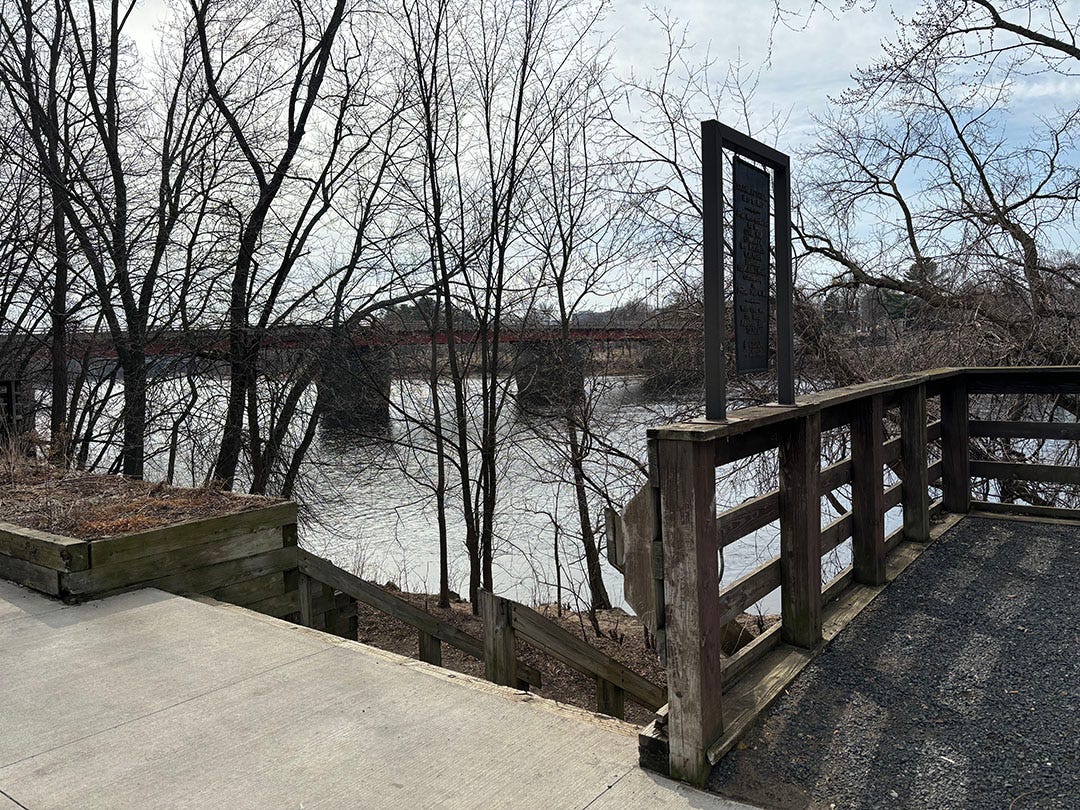
If Eau Claire weren't experiencing a -25 degree F windchill right now, I'd walk about half an hour from my house to the Chippewa River downtown. There, at the end of Gray Street, I could enjoy the view from a platform overlooking the river. Reading the history marker planted there, I could learn that from 1855 to 1880, it was the site of a steamboat landing most remembered in Eau Claire as the place where the famous war eagle, Old Abe, left for the Civil War on September 6, 1861.1
What the site isn't yet remembered for--but I'm determined it will be--is a man named Henry Hudson. When Henry died of a gunshot wound on April 7, 1920, his estate amounted to nearly $230,000 in today's money. Maybe that doesn't sound like a lot, but maybe you'll change your mind when you know that Henry was a Black man born in Mississippi around 1862. His mother probably wasn't a free person and probably neither was he until he was a toddler. At the very least, according to every source I could find, he came to Eau Claire around 1900 with not a cent to his name. In this country that says it likes to admire people with strong bootstraps, Henry really should be a local hero.
While researching Henry's chapter in Hidden History of Eau Claire, I located a digital copy of the probate file for his estate. This kind of thing is a gold mine for anyone researching local history. Not only did I learn a lot about the kind of things Henry owned, I was able to piece together a better understanding of what a junk shop was in the early 1900s in Eau Claire. I found out the names of two of his (presumably) closest friends in town--Wilma Blumberg, who petitioned the court to have a special administrator appointed for Henry's estate, and Knute Anderson, whom the court appointed. I don't have time today to talk much about them, but I plan to do research in the future to see if I can shed further light on their relationships with Henry.
For now, I'll leave you with a truncated list of the inventory of Henry's possessions. For some, I've even been able to find representative images from period newspapers (no guarantee they're the exact objects, of course, given I have so little detail to work with).
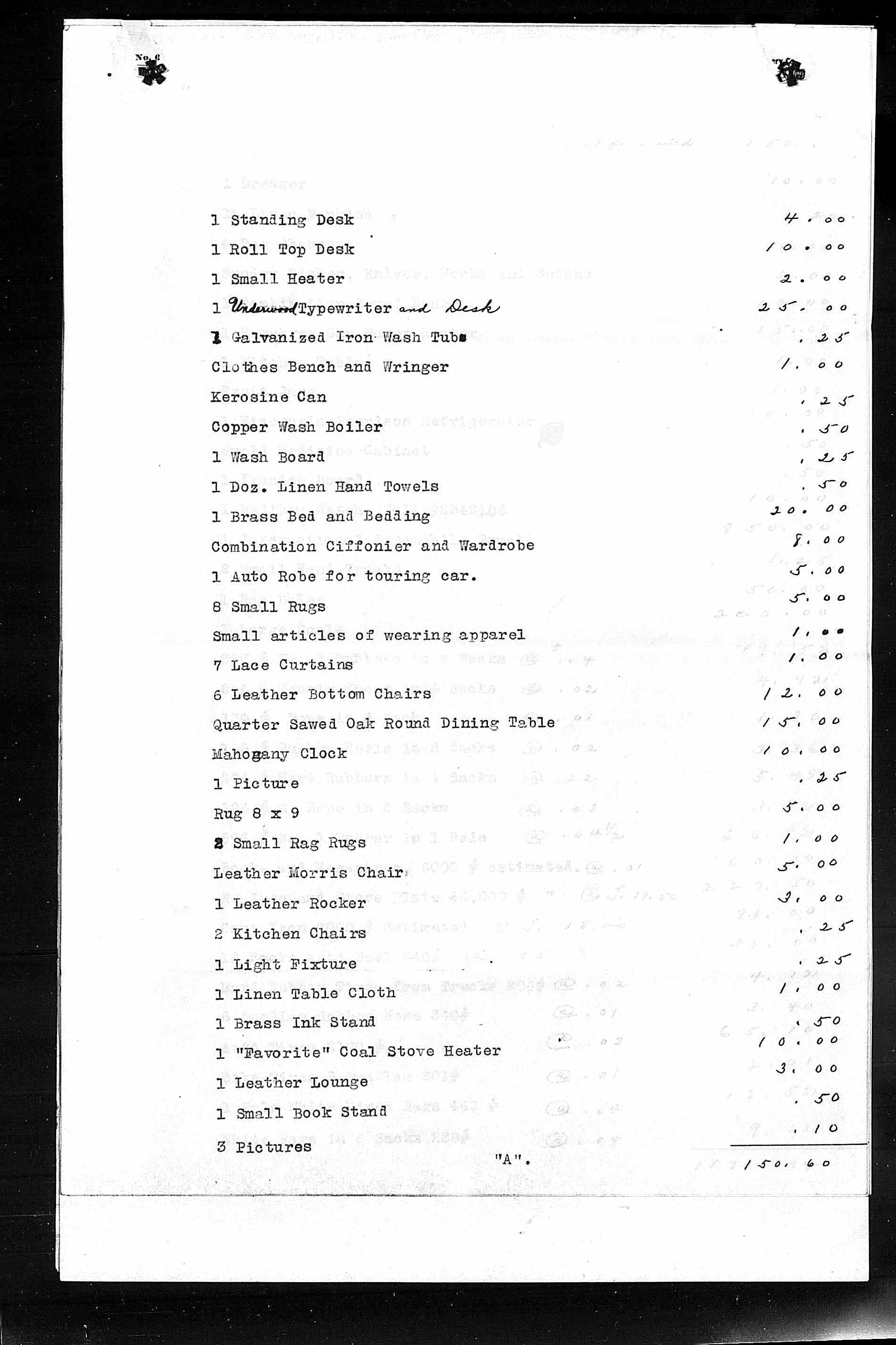
standing desk
roll top desk
Underwood typewriter and desk
brass bed and bedding
Auto robe for touring car
6 leather bottom chairs
Leather Morris chair
Favorite coal stove heater
small medicine cabinet
246 lbs. tennis shoes
168 lbs. rubber heels
6000 lbs. (est.) books and magazines
9000 lbs. (est.) cast iron
206 lbs. hard rubber tires from trucks
2170 lbs. auto tires
201 lbs. bike tires
215-lb. bale of cotton batting
1656 lbs. mixed rags
tool chest
8 cow hides
36 small hides
150 lbs. brass in barrel
old threshing machine engine
10 lbs. zinc
Next in the series:

When I say Old Abe is famous, I mean when I was visiting a Civil War battlefield in Tennessee a few years ago, they treated me like a celebrity when they found out my museum interprets the history of a bird who's been dead for almost 144 years.
What a great intro to what sounds like an intriguing story, and I love that you're telling his story - sounds like he deserves to be remembered.
That's quite the estate and an impressive number of books. But I am curious to know why he was shot by a white man in broad daylight in front of the federal building.